RUNAWAYS
is a response to Aeschylus’s “Danaids”, about women in flight from the violence of men, set in eras ranging from the 1850’s to the 1930’s.
Place and Time
A vintage 1930’s diner, Fall, late afternoon.
Characters
THE RUNAWAYS all are in their teens through their twenties, all from different eras. All are North American, except for Molly, who is from Ireland. THE WAITRESS: could be in her fifties, could be immortal; old enough anyway to be the mother of all the young women.
“There is an old idea, a Greek one, but familiar to many cultures, that the suppliant is holy. To do wrong to the suppliant - the beggar, the sick, the wounded, the child-is particularly hateful to God, and Zeus himself is known as the protector of suppliants. Which may explain the draw of this myth - that image of the refugee and our deep, inchoate sense of kinship with those who are in flight. Perhaps we sense that to be human, is, to some extent, to be on the run. But there’s something about the idea of the runaway that we understand, however obliquely, There is a longing for release in us, a desire to light out, away from everything that oppresses us. So when we hear a tale of someone who successfully flees an impossible situation of any kind and makes an escape, some unarticulated part in all of us exults.”
Ellen McLaughlin
CONVERSATIONS AT THE RETURN OF SPRING
CHARACTERS
DEMETER Goddess of the Harvest, mother, immortal
PERSEPHONE Queen of the Dead, her daughter, also immortal, yet younger
PLACE Somewhere on Earth
TIME The moment when winter gives way to spring. Starting in early human time and ending in the present: Four scenes, set in 8000 B.C. (Greece), 1851 (Ireland), 1940 (Kansas), and 2026 (Toronto)
Persephone, daughter of the Earth Goddess, Demeter, must spend six months of the year in the Land of the Dead with her husband, Hades, God of the Underworld. But every year her exile comes to an end when she returns from below to her mother. And with that reunion the spring begins.
“Agriculture is Demeter’s gift to humanity and is our necessity once the eternal cycle of seasons comes into being. If we as a species are to continue, we need to survive the terrible trial of winter with the promise of spring and a sustaining durable harvest. But agriculture has also always brought humanity its share of misery and, depending on how it’s practiced, can be a blight on the natural world as well.
It occurred to me that I could write about the history of agriculture by listening in on a few conversations from the thousands had by Demeter and Persephone when they are reunited at the beginning of spring every year. It seems to me that Persephone as the Queen of the Dead has more to do with human beings than any other figure in the pantheon. She hears our stories and knows our regrets and woes as none of the other deities do. I thought that she might be haunted by those stories and trail them up with her as she returns to her mother to discuss what has become of the gift Demeter gave us back at the beginning of seasonal time. Demeter speaks for the natural world, which is her realm, and Persephone speaks for us.”
Ellen McLaughlin
“Ellen McLaughlin is a dramatist of courage, intelligence, wit, and lyricism.”
Tony Kushner
“Ellen McLaughlin’s body of work is breathtaking and astonishing. Brilliantly incisive and insightful - she brings the Greeks to us with her own contemporary, political, poetic edge, finding the universal and the particular in (unfortunately) timeless themes…” Sarah Ruhl
“Powerfully urgent…Ms. McLaughlin has adapted many Greek dramas - but perhaps ‘adaptation’ isn’t the right word for her work, which feels so new. Though it’s faithful in many ways…it reveals itself to be purpose-built for our moment, addressing eternal issues from a radically different perspective.”
Jesse Green, New York Times
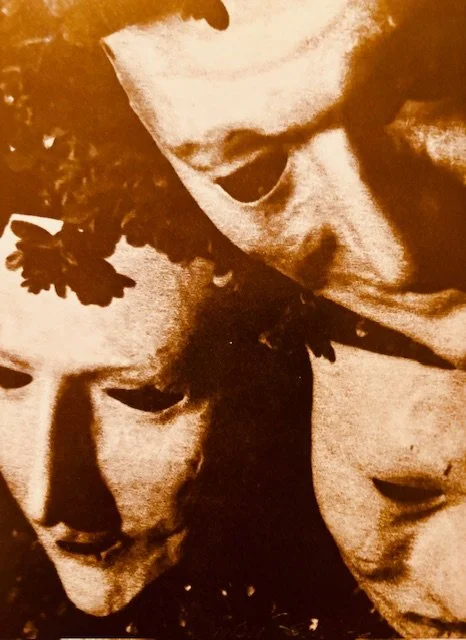
Ellen McLaughlin's plays have received numerous national and international productions. They include Days and Nights Within, A Narrow Bed, Infinity's House, Ipheginia and other daughters,Tongue of a Bird, The Trojan Women, Helen, The Persians, Oedipus, Ajax in Iraq, Kissing the Floor, Septimus and Clarissa, Penelope, Blood Moon, Mercury’s Footpath, and The Oresteia. Producers include: the Public Theater, The National Actors' Theater, Classic Stage Co., Prototype Festival and New York Theater Workshop in NYC, Actors' Theater of Louisville, The Actors' Gang L.A., The Intiman Theater, Seattle, Almeida Theater, London, The Mark Taper Forum, L.A., The Oregon Shakespeare Festival, The Getty Villa, California., The Guthrie Theater, Minnesota, and Shakespeare Theater Company, Washington DC, among other venues.
Grants and awards include: Helen Merrill Award for Playwriting, Great American Play Contest, Susan Smith Blackburn Prize, the NEA, the Writer's Award from the Lila Wallace-Reader's Digest Fund, the Berilla Kerr Award for playwrighting. T.C.G./Fox Residency Grant -- for Ajax in Iraq, written for the A.R.T. Institute.
She has taught playwriting at Barnard College since 1995. Other teaching posts include Breadloaf School of English, Yale Drama School and Princeton University, and others.
Ms. McLaughlin is also an actor. She is most well known for having originated the part of the Angel in Tony Kushner's Angels in America, appearing in every U.S. production from its earliest workshops through its Broadway run.